West Post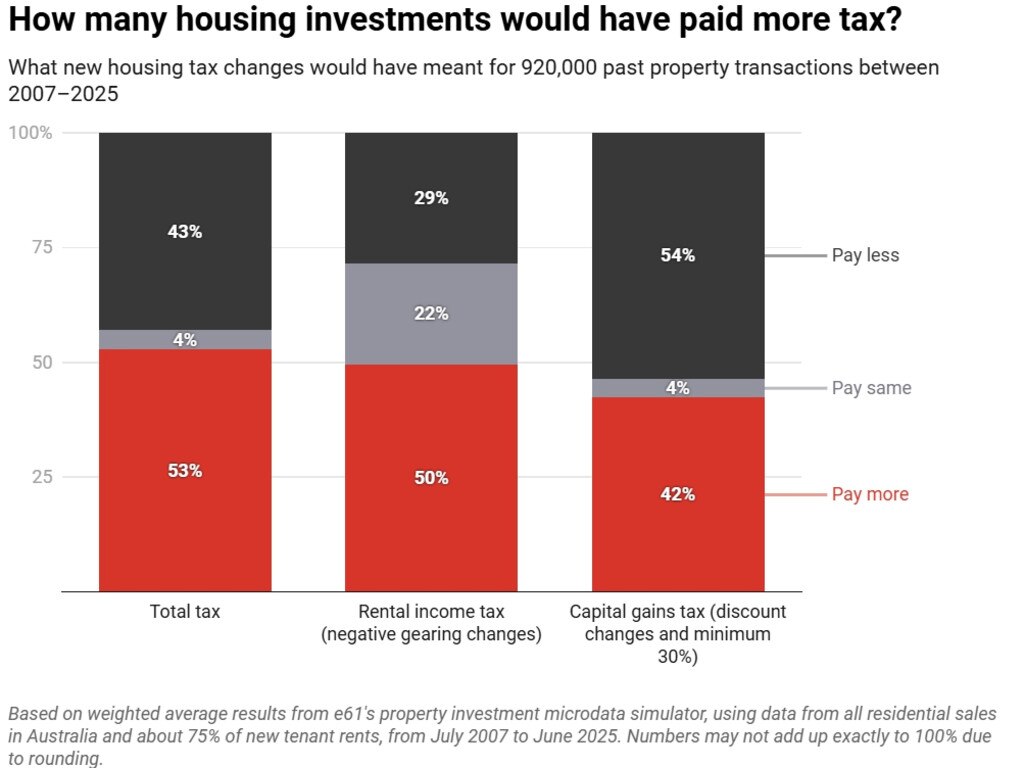
Labor’s tax changes announced in the May federal budget will force retirees who own a rental home to pay more, while reducing the tax burden on other groups, new University of NSW research has revealed. University researchers noted reforms of capital gains tax, in particular, would leave retirees worse off. Treasurer Jim Chalmers claimed in his budget night speech that the tax reforms were aimed at addressing “intergenerational equity”.
This includes scrapping negative gearing tax benefits for investment properties and cutting the capital gains tax (CGT) discount from 50 to 30 per cent, for those who sell investment properties. MORE: ATO leaks reveal where gearing reforms will hurt most New research suggests upcoming housing investor taxes will have a less dramatic impact than many fear. Picture: UNSW / e61 Institute MORE: Retirement village shortage locks up family homes Visiting researchers at the University of NSW identified that the CGT reform would ultimately leave retirees worse off when using property to fund their later years.
“This change is particularly aimed at people selling property in low-income years – who are often retirees,” researchers Nick Garvin and Elyse Dwyer said in The Conversation. “Retirees who own an investment property are unlikely to qualify for the age-pensioner exemption to the 30 per cent minimum tax. MORE: ‘Unfair’: Aussies targeted in new low in days Retirees will be among the worst off under Labor’s new tax scheme.
Picture: iStock “So they will be among the investors most affected by the July 2027 changes. “Investors with highly leveraged properties are also among the worst off. “These investors pay more in interest and have a higher likelihood of being negatively geared,” they said.
The UNSW researchers looked at data from 2007 to 2025 and found that only half of these previous investors would have paid more tax under the new system. “We used that data to estimate how many of those investments would have ended up paying more or less tax in that 18-year period, if the reforms starting in July 2027 had already been in place,” the researchers said. MORE: Aus mortgage crisis just got worse The new reforms will have an equalising effect where high profits and large losses will both be minimised.
Picture: NewsWire / Max Mason-Hubers “After comparing the pre- and post-reform tax systems, we found that about 53 per cent of property investments would have paid more tax in total under the new reforms. “This means a surprisingly high proportion, 47 per cent, would have paid the same, or less, in total tax on housing investments,” they said. Dr Garvin and Ms Dwyer noted the reforms ultimately reduce high after-tax gains for investors while minimising large after-tax losses.
MORE: Sydney’s great house and unit divide
Source: realestate.com.au