West Post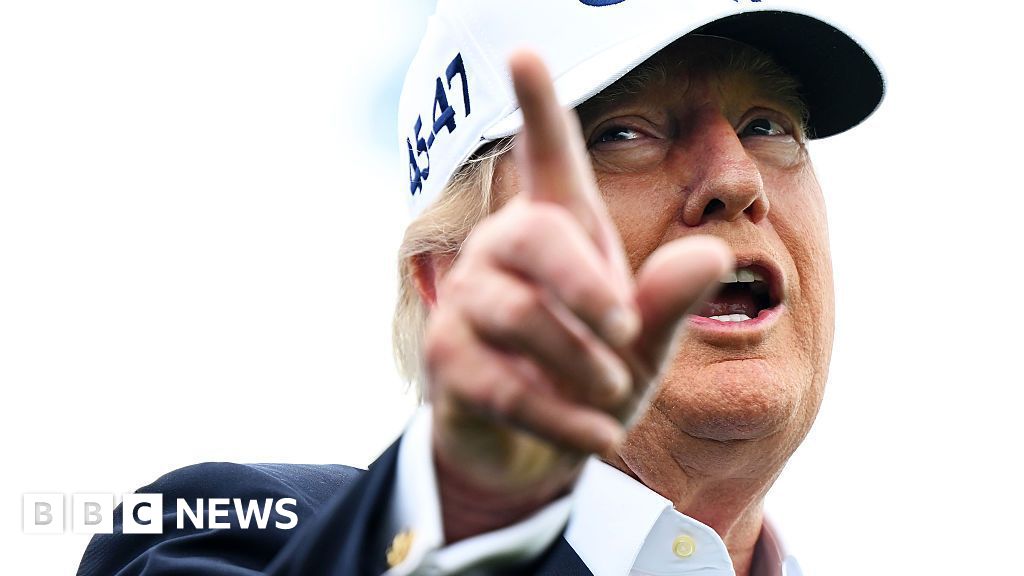
10 minutes ago Anthony Zurcher North America correspondent According to Donald Trump, concerns about the dangers of artificial intelligence technology – that "robots will be marching into our cities and getting rid of us all" – are a hoax. It's the kind of language the US president typically reserves for the objects of his most intense derision – theories about human-driven climate change, investigations into Russian election-meddling, and the drives to impeach and remove him from office during his first presidential term. Styling himself as the "hoax buster", in a series of social media posts on Monday he issued a full-throated endorsement of what he called "the greatest economic development engine in history" and scorned those who doubted the benefits of the technology.
The ranks of doubters have been growing in recent weeks, however, amidst anxiety over the disruptive nature of AI - if not worries about potentially civilisation-threatening danger - among some industry insiders and politicians, including from within Trump's own Republican Party. None of that has deterred Trump, however, whose latest social media fusillade was only his latest effort to turn back growing AI scepticism through sheer force of will. Whether the president views the AI fight as pivotal to his economic legacy, a key battleground in a global struggle for power, or another example of his enemies conspiring against him, he has, by fully joining the fight, elevated the issue to the forefront of American politics.
That is even at the risk of crossing longtime allies. "We think this could be a great technology, but we're not going to give these guys a carte blanche," former Trump adviser Steve Bannon said at a "pro-human" conference on the dangers of AI on Tuesday. "There's been no debate." Just before Bannon spoke, democratic socialist Senator Bernie Sanders of Vermont told the same crowd that Washington policymakers had not addressed the "potentially catastrophic consequence" of unregulated AI.
"Congress under both Democratic and Republican control has been asleep at the wheel," he said. "And now we have a president whose ignorance regarding this issue is truly embarrassing." According to Trump, however, what's needed isn't debate or new policies, it's trust in his authority and judgement. "The only control or 'guardrails' that AI needs is a STRONG AND SMART (High IQ!) PRESIDENT, and the U.S.A. has that, in spades," he wrote.
"We already have tremendous CRIMINAL and REGULATORY power over these companies." A desire for centralised presidential authority is a familiar theme for Trump in his second term in office. If he decides something is good, he should have the authority to allow it; if he deems it bad, he ought to be able to end it by unilateral presidential order. It's similar to his outlook on immigration and trade.
He believes that he, as president, should have the sole power to decide who can enter and remain in the country, and when and where to impose tariffs. Unlike tariffs and immigration, which have been issues of interest for Trump for decades, the rise in artificial intelligence technology is a recent development. But if this is no long-time, deep-seated interest on the part of the president, what could explain his willingness to press ahead?
The 'hottest' economy and the driving force of AI Trump regularly likes to tout America as the "hottest" country in the world. Many economists indicate that investment in AI technology – including infrastructure and equipment – has been the driving force in the US economy for several years. According to a recent report by the forecasting firm ING, tech investment accounted for more than a third of all US economic expansion in the second quarter of 2026.
The stock market is booming, and much of that rise in corporate value (and, by extension, surging retirement portfolios of many Americans) can be attributed to the massive spending on computer chips, data centres and the other infrastructure behind AI. Anything that threatens this growth, which Trump considers to be a hallmark of his presidency and a key to his political legacy, quickly draws his suspicion. Trump also sees the AI expansion as a large-scale industrial competition between the world's two largest economies, the US and China.
In the zero-sum game of global power, if China is ahead, then America is behind. "We're leading China in AI," Trump said on Saturday, "and frankly, I want to keep it that way, because whoever wins AI wins." The president often touts a familiar conservative view that his opponents on the left are against the free market and economic liberties, and rely on alarmism to justify greater government intervention and control. Of course, Trump – who touts partial US ownership of US Steel and the semiconductor manufacturer Intel, and has no qualms about picking winners and losers in the American economy – is hardly a traditional small-government conservative.
Tech bosses vary in views - and their access to Trump Trump's close ties to prominent tech moguls and AI entrepreneurs from the start of his second term may also help explain his AI evangelism. Tech entrepreneur David Sacks, a co-chair of the president's Council of Advisors on Science and Technology and his informal AI tsar, has been a longtime supporter. Sacks's publicly aired scepticism of AI regulation mirrors recent comments made by the president.
"I think this is becoming a panic," he said this weekend in an interview with CBS News. "We're in an election season, and there is an incentive for political actors to try and amplify the fear." Elon Musk, despite a rocky relationship, has shaped the direction of this administration. Mark Zuckerberg of Facebook, Amazon's Jeff Bezos, OpenAI's Sam Altman and former Apple head Tim Cook all had prominent seats at Trump's inauguration.
These men, along with Anthropic head Dario Amodei, hold a range of views on the necessity of greater AI regulation, and have differing levels of access to, and influence on, Trump. In Amodei's case, his conflicts over the Pentagon's unrestricted use of Anthropic's AI models could have negatively affected Trump's evaluation of Amodei's calls for a slowdown in AI development. "This is the most prominent debate in the entire industry and has been since the beginning," said Matt Calkins, head of the tech firm Appian.
"We knew it would spill into politics at some point because it had to." Where the political debate goes from here is an open question. With Trump's resistance, it is unlikely that Congress – despite promises of new hearings and proposed regulatory controls – will enact new legislation that Trump would sign into law. On Tuesday, Republican Speaker of the House Mike Johnson appeared to back away from earlier openness to congressional action, instead echoing Trump "AI hoax" rhetoric.
With midterm congressional elections looming, candidates running for office – both Republicans and Democrats – are wary of ending up on the wrong side of public opinion that, according to polls, is sceptical of the promised benefits of AI advances. But Republicans are also wary of crossing Trump on an issue that has become a political touchstone for the president. Even though the public is starting to pay attention, Caulkins says that the issue has not yet become political dynamite, which means political rhetoric comes with little risk.
The moment when AI warnings turn into a high-profile disaster, however, could be looming. "It is possible that events in the future might electrify the public, and then positions - and talk - might not be so cheap," he said.
Source: BBC